

The Feminine Trickster Archetype in Modern Pop
Pop’s Mischief Maker
Doja Cat isn’t just a hitmaker, she’s a shapeshifter. One week she’s an R&B siren, the next a snarling rapper, and then—why not—a feline at the Met Gala, meowing through interviews with theatrical commitment. That unpredictability isn’t chaos; it’s the modern face of an ancient archetype —the trickster.
This essay examines how Doja channels that archetype through humor, irony, and constant reinvention, placing her alongside pop’s other masters of mischief: Nicki Minaj, Missy Elliott, Janelle Monáe, and Prince. Together, they form a “trickster squad” of artists who utilize laughter and transformation as a means of liberation.
Catch Doja on her latest tour.
Tricksters 101: What Are We Talking About?
In mythology, the trickster is the rebel genius—the witty boundary-breaker who exposes hypocrisy and turns seriousness into satire. They mix sacred with profane, male with female, light with dark. Their weapon isn’t strength—it’s wit.
Crucially, the trickster isn’t confined to one gender. The archetype is about method, not identity: slip out of expectations, remix the script, and make people laugh while you do it.
In modern pop, female artists have seized this energy and spun it into something electric. The result? Women who weaponize humor, chaos, and contradiction to stay three steps ahead of the culture trying to define them.
Doja Cat: Pop’s Playful Shape-Shifter
1) The Internet Troll… With Craft
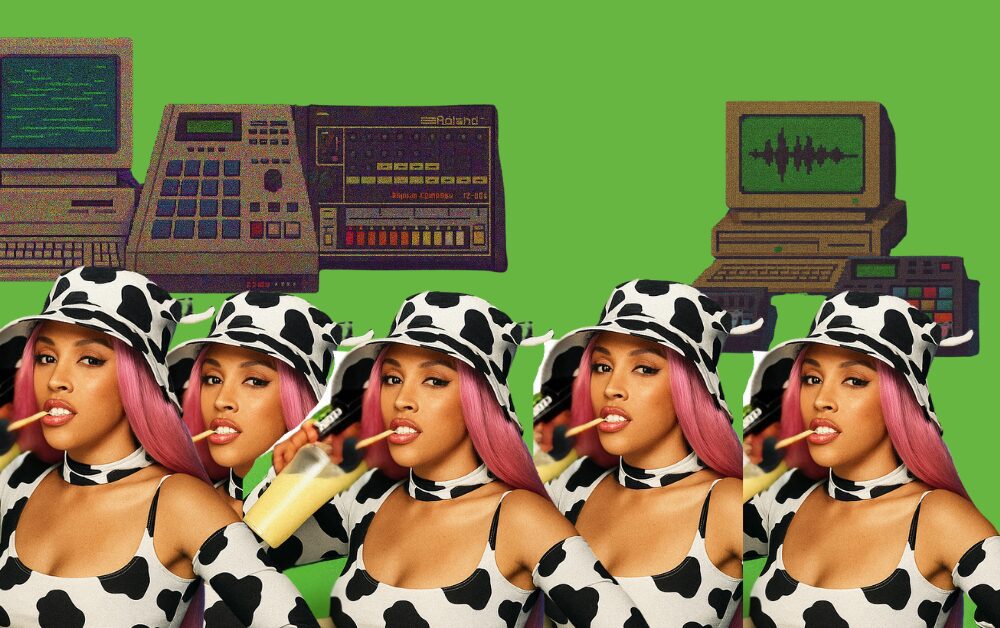
Doja’s humor isn’t random—it’s conceptual. “Mooo!” wasn’t just a meme; it was a manifesto. She turned low-budget absurdity (green screen cows, french fries as props) into a viral statement about authenticity. She proved a career could start from silliness—and that irony can sell records. Read more about how “Mooo!” went viral and built her career.
2) Irony As Instrument
Many of Doja’s videos feel like inside jokes between her and the internet. Her lyrics play with meme culture, vanity, and the weirdness of fame itself. She turns spectacle into self-parody, reminding us that she’s both the puppet and the puppeteer. Her use of samples and cultural mashups also reveals the layered nature of her creativity—see what influences Doja Cat and how she builds her sound.
Examples of Doja Cat Using Irony as an Instrument
-
Parodying Pop Culture: The Sydney Sweeney Jeans Ad
-
Doja created a parody video mocking Sydney Sweeney’s controversial American Eagle “good jeans” ad.
-
She exaggerates the delivery and aesthetic, turning it into a satirical take on influencer marketing and brand sincerity.
-
By mocking these tropes, she positions herself both inside and outside the spectacle—both creator and critic, which is exactly where irony thrives.
-
-
“Agora Hills”: Satire + Self-Awareness
-
The song and video feature satiric spoken interludes, purposefully cringey ad-libs, and laughter breaks woven into the track.
-
Doja raps with an exaggerated “valley girl” accent, turning caricature into commentary.
-
It’s a self-aware performance—she’s mocking the very pop personas she could easily embody.
-

And above Doja Cat’s ass in GIF form.
-
Video Imagery with Dual Versions / Mirror Plays
-
In the “Jealous Type” video, Doja appears as two versions of herself dancing on opposite sides of a limo window before finally meeting.
-
The mirror/doppelgänger imagery nods to identity play and ironic self-confrontation.
-
She even watches a home movie of herself in the video—literally directing her own myth.
-
-
Visuals That Feel Like Inside Jokes
-
Many of Doja’s music videos incorporate meme aesthetics, retro filters, and GIF-like sequences that wink at internet visual culture.
-
Her “Demons” video leans into theatrical horror tropes—but with a wink; she’s both the demon and the stagehand pulling the strings of fear and delight. Critics called it “smart, sinister, and knowingly dumb all at once.”
-
In “Gorgeous,” she uses the framework of an ’80s cosmetics commercial, complete with slow pans and product-style glamour shots, turning the beauty-ad formula into a tongue-in-cheek performance.
-
3) Transformation As a Habit
Doja changes identities the way other artists change outfits. From pastel ’90s nostalgia to demonic couture in “Demons”, she reinvents herself so frequently it becomes her constant. This unpredictability—half humor, half defiance—keeps her image from ever hardening into something marketable or safe.
4) Contradiction = Control
Doja’s contradictions are calculated. She’ll troll her fanbase one day and drop a hit the next. She’s playful, provocative, and perfectly aware that confusion equals control. Her own words sum it up best: “I love being a punk to people who take things way too seriously.”
The Trickster Squad: Nicki, Missy, and Prince
Nicki Minaj — The Cartoon Theorist
Nicki turned alter-egos into superpowers. From Roman Zolanski’s fury to Harajuku Barbie’s sweetness, she blurred personas to escape typecasting. Her exaggerated voices, faces, and verses turned rap into theater. When critics tried to box her in, she simply created another character to step out of it.
Missy Elliott — Surrealist Engineer
Missy made futurism funky and humor revolutionary. Inflatable trash-bag suits, fisheye lenses, reversed lyrics—her visuals and beats built a world where weirdness was the standard. She didn’t just expand the sound of hip-hop; she expanded what female empowerment could look like: playful, commanding, and fun.
Prince — The Androgynous Agitator
Prince was the trickster in heels. He blurred every line—genre, gender, even his own name. He was both romantic and rebellious, spiritual and sexual. His refusal to be one thing inspired a generation of artists to embrace fluidity as freedom.
Together, these icons created a lineage. Nicki brought cartoon rap theater. Missy brought surreal comedy. Prince brought divine rebellion. Doja Cat stitches all three threads into one dazzling, chaotic, 21st-century tapestry.
Sidebar: Five Essential Trickster Moments in Doja Cat’s Career
- The “Mooo!” Moment (2018) – DIY absurdity turned viral manifesto. (Read more)
- Met Gala Meow (2023) – Fully embodying her feline persona on the red carpet, refusing to break character.
- Paris Fashion Week (2023) – Covered in 30,000 red Swarovski crystals—turning discomfort into theater.
- Eyebrow-Shaving Livestream (2022) – A rejection of beauty norms and fan entitlement, done with deadpan humor.
- “Demons” Video (2023) – Gothic horror meets performance art, solidifying her status as pop’s chaos goddess.
View this post on Instagram
Why The Trickster Archetype Empowers Women
1) Freedom From “Pick a Lane”
Pop marketing loves neat boxes. Tricksters tear them up. Doja, Nicki, and Missy have all shown that inconsistency can be a brand in itself. Their flexibility is their freedom.
2) Narrative Control
Surprise keeps artists in charge of their story. By flipping between personas and aesthetics, tricksters force audiences to follow their rhythm.
3) Humor Disarms Judgment
A joke can be armor. Missy used humor to deflect body shaming; Doja uses irony to neutralize scandal. Comedy lets women own the narrative instead of being consumed by it.
4) Challenging Double Standards
Men are praised for being wild; women are policed for it. Trickster energy levels the field. When women act out, it’s not meltdown—it’s method.
5) Audience Liberation
Watching a trickster at work can be contagious. Fans see Doja’s boldness and get permission to be messy, weird, or free. That’s how cultural change actually happens—not through sermons, but through laughter.
Sidebar: Playlist — Trickster Energy Only
- Nicki Minaj – “Monster” (Verse)
- Missy Elliott – “The Rain (Supa Dupa Fly)”
- Prince – “Controversy”
- Doja Cat – “Attention”
- Doja Cat – “Get Into It (Yuh)”
- Janelle Monáe – “Q.U.E.E.N.” (Learn about her connection to Prince)
This mix hits every shade of mischief—from the camp theatrics of Nicki to Prince’s cosmic playfulness. Explore Janelle’s recent classic, The Age of Pleasure.
Sidebar: Quick Q&A
Q: Is Doja Cat’s unpredictability a “strategy”?
A: Absolutely—but not in the cynical sense. It’s creative strategy disguised as chaos. Her unpredictability keeps fans engaged, media guessing, and the art alive.
The Bigger Picture
The feminine trickster is more than chaos for chaos’ sake; it’s liberation through laughter. It’s the artist who turns reinvention into ritual, who uses confusion as a kind of power.
Doja Cat, Nicki Minaj, Missy Elliott, and Prince all prove the same point: you can’t control what you can’t categorize.
In a culture that demands stability, these artists make mutability look divine. Their message is simple and subversive: if the world keeps asking you to be one thing, show them five, and make them dance while you do it.