

KLAY at the Gates of the Future
(the majors shake hands with the machine)
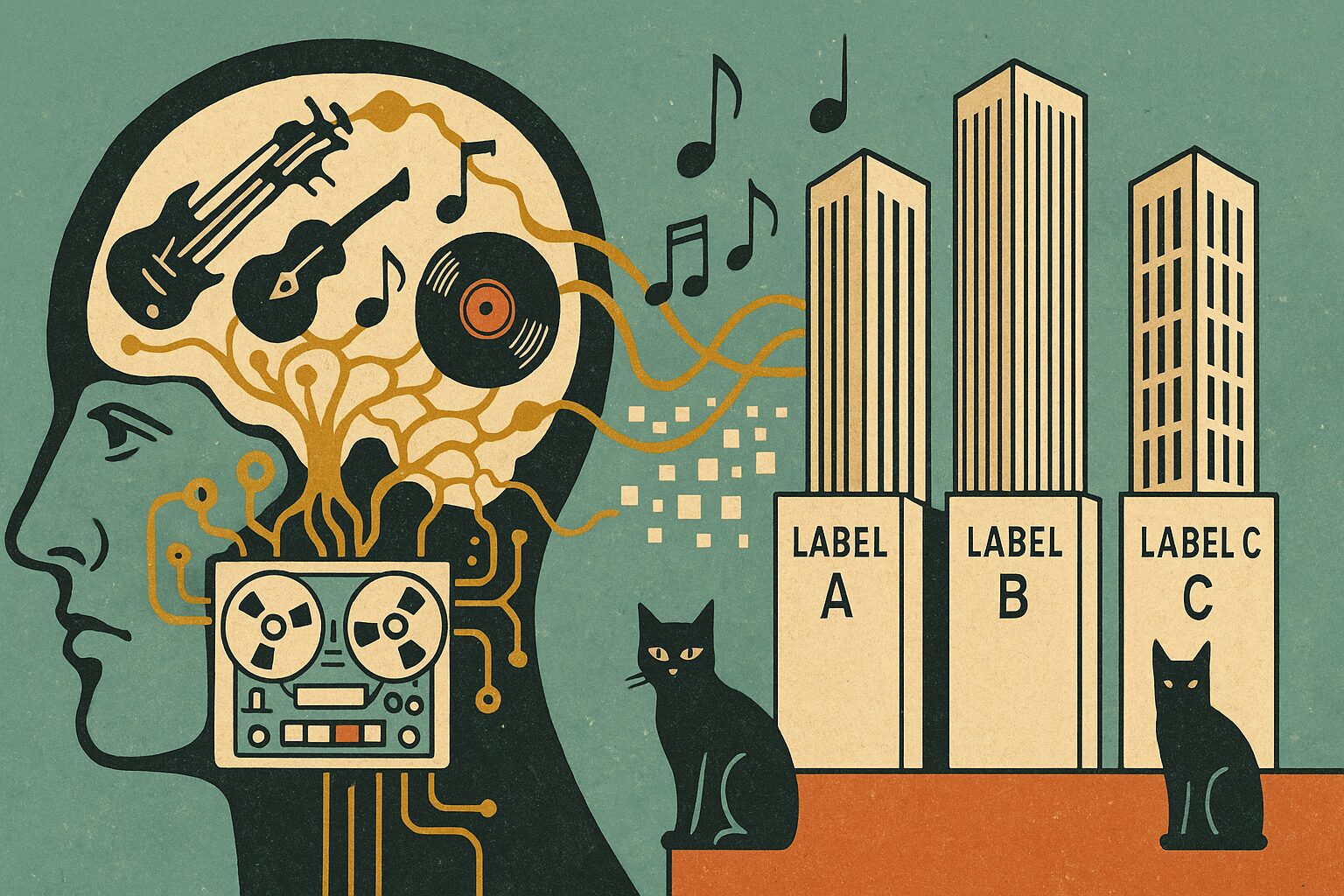
The music business spent years circling AI with the wary posture of a cat sent to guard a koi pond. Water splashed anyway, and now the labels have decided to stock the pond rather than drain it. On November 20, 2025, Los Angeles-based KLAY Vision Inc. stepped forward with a deal architecture that reads like a treaty, separate licensing agreements with Universal, Sony, and Warner across both master and publishing divisions. A clean sweep, a signal flare, a contract ceremony disguised as product news.
Executives framed KLAY as a subscription-based portal for “active listening.” The company built a Large Music Model trained on licensed music, a choice that turns the usual AI origin story into something closer to a union job. No scraping, no shadow reservoirs of anonymous datasets. KLAY claims that every note in its model has been stamped by its owner.
The Majors Trade Helmets for Headsets
(or, how lawsuits evolved into business plans)
Litigation once set the tempo for AI conversations. Courtrooms filled with accusations about ghost vocals and synthetic catalogs. By late 2025, another pattern emerged. Warner reached détente with Udio and prepared a remix-centric service for 2026. Universal experimented with controlled AI sandboxes that kept outputs behind locked doors. Those moves softened the ground for something broader. KLAY walked into that clearing with a framework that satisfied the majors’ hunger for compliance, accounting, and airtight provenance.
The result feels less like an app launch and more like the unveiling of new infrastructure. KLAY presents “interactivity” as the draw, shape-shifting remixes, novel listening modes, and stylistic transformations that operate inside a rights-cleared bubble. The company speaks about “uplifting artists,” a phrase engineered for both fan intrigue and policymaker calm.
Curious what AI shouldn’t touch? Hit our radio station and hear the real deal.
The Royalty Riddle
(a puzzle box with velvet lining)
KLAY’s announcement leaves the money map partly folded. Royalty flows remain a mystery. How granular will usage tracking become? Does a fan’s ten-minute session of style-bending count as one play or many micro-plays? These questions matter because they determine whether KLAY becomes a boutique revenue boost or a quiet new line item on every royalty statement.
Artists and songwriters will eventually need clarity about controls. Opt-ins, opt-outs, stem permissions, vocal likeness settings, and revocation clauses form the new backbone of musical self-determination. The majors built the licensing perimeter; creators now need tools to navigate the interior.
The Indie Equation
(a wide-open promise waiting for blueprints)
KLAY vows to expand the model to independent labels, publishers, and solo artists. The promise sounds generous, and the stakes run high. The independents bring catalog variety, scene-level trust, and experimental instincts. Their inclusion could turn KLAY from a major-label greenhouse into a broader ecosystem. The shape of those deals will reveal how equitable this new AI landscape becomes.
Beyond the Prompt-to-Song Era
(the machine learns to listen)
KLAY sidesteps the “AI artist” narrative. Instead, it embraces an idea that feels old and futuristic in the same breath, listening as a creative act. Fans will sculpt playback experiences rather than conjure entire compositions on command. The model behaves like an instrument that responds to context and taste, a system built for exploration rather than replacement.
This approach lands at a moment when music culture craves tactility again. The model becomes a kind of reactive mixing board, the opposite of the static playlists that have ruled the 2010s and 2020s. Listeners wander through music rather than receiving it in pre-shaped blocks.
What This Moment Really Signals
(the horizon clicks into place)
KLAY’s three-majors alliance reshapes how AI enters the music business. The deal transforms abstract policy debates into a functioning template, licensed training, contained environments, transparent authorship, and the promise of royalties. Legislators will consider this model when debating AI’s responsibilities. Artists will study it when they weigh control against opportunity. Fans will decide whether interactivity feels like liberation or an unfamiliar kind of curation.
For now, KLAY stands at the front of a new procession. The industry has begun building with AI rather than reacting to it. Call the moment a handshake, not a détente. It opens a corridor that leads toward new creative tools, new business rules, and a listening culture shaped by collaboration between the catalog and the code.
Recommended listening while digesting this shift:
Donuts by J Dilla, for its lessons in transformation and loop-bounded freedom.
Music for 18 Musicians by Steve Reich, for its pulse of evolving repetition.
Selected Ambient Works 85–92 by Aphex Twin, for its proto-algorithmic imagination.
Or check out a best of J DIlla beats here or below: